Key Takeaways:
- Virgin kraft paper generally offers higher strength and a cleaner appearance depending on the GSM and grade.
- Recycled kraft paper is often a more economical option and its strength depends on fibre quality and GSM.
- Manufacturers can also choose a combination of both: blended kraft paper. It combines virgin and recycled fibres to balance strength and cost.
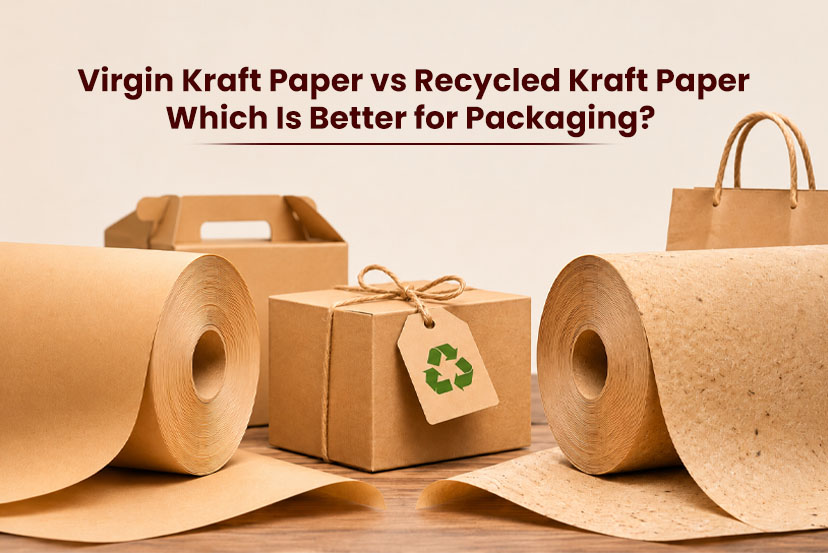
Virgin kraft paper and recycled kraft paper both have their own benefits for specific applications, and neither can be used in every situation. Both are widely used in packaging, and the right choice depends on what the final product has to carry. For instance, different grades of kraft papers are used for specific applications such as industrial products, e-commerce packaging, carry bags, and gift items. This guide explains the major differences between these two types of kraft papers so that you can choose the right one for your packaging requirements.
What is Virgin Kraft Paper?
Virgin kraft paper is made from fresh wood pulp processed through the sulfate pulping method. These papers offer durability and better tensile strength because they are made from new fibres. They also have a more even surface that suits printing and branded packaging. Virgin kraft is considered ideal for manufacturing heavy-duty bags, industrial wrapping, pallet interleaving, and branded packaging.
What is Recycled Kraft Paper?
Recycled kraft paper is made from recycled fibres rather than fresh wood pulp, which often makes it more affordable than virgin kraft. Mainly, collected used paper and board, like old corrugated containers and kraft sacks, are used to manufacture it. Paper fibres become weak with every recycling process, usually lasting for about 5-7 cycles. This is why some virgin fibre is often blended in to keep its bonding ability. Colour and surface characteristics vary with the recovered fibre furnish and manufacturing process.
What is Blended Kraft Paper?
Blended kraft paper combines both virgin and recycled fibres for balancing strength and affordability. It is formed because the fibres become weak with every recycling process and adding virgin fibre helps with bonding. When you plan to buy it, ask the manufacturer for the blend ratio and test date to ensure it is of the right grade that you need.
What are the Major Differences Between Virgin Kraft Paper and Recycled Kraft Paper?
Factor | Virgin Kraft Paper | Recycled Kraft Paper |
Raw material | Made from fresh wood pulp | Made from used paper and cardboard, sometimes mixed with new fibres |
Strength | Generally higher based on GSM and grade | Varies depending on the paper grade, GSM, and fibre quality. |
Appearance | Has a more even surface | May have spots or uneven colour |
Food contact | Has fewer contamination concerns, but must still meet food safety standards | Needs proper safety checks before food use because recycled fibre may carry contaminants such as mineral oils and ink residues. |
Recycled content | Does not contain recycled fibres | Contains recycled fibres |
Cost | Usually costs more | Usually costs less |
Common uses | Heavy bags, wrapping and quality printing | Corrugated liners and medium, carry bags, e-commerce packaging, sacks, void filling, and light wrapping, based on the grade. |
How Do Virgin and Recycled Kraft Paper Compare in Strength and Performance?
Both the types of kraft paper are not always strong. Virgin kraft starts with new fibres, including long fibres, and generally offers higher strength, though the result depends on GSM and grade.
Recycled kraft can meet the strength needs of many applications. Its strength depends on the quality of the recovered fibre and the manufacturing process. Mills that recover usable long fibre, such as from pre-consumer converting waste, can make recycled grades with good strength for demanding uses.
The right choice depends on the strength, GSM and cost your application needs. Ask for test data on the exact grade rather than judging by fibre type alone.
Environmental Impact of Virgin Kraft vs. Recycled Kraft Paper
Recycled kraft paper helps reduce the need for fresh wood and keeps the old fibres in use. However, the full picture is less simple. Carbon emissions depend on various factors like the mill's location and the technology it uses, along with the energy mix.
Recycling old fibres has its limits as they get weak with each process and repeated use. This is why fresh fibre is also mixed during the process to enhance bonding ability.
Which is Better for Packaging: Virgin or Recycled Kraft Paper?
Here’s the table for easy understanding:
Application | Recommended paper type |
Heavy items, strong bags and industrial wrapping | Virgin kraft, a blend or a recycled grade made for load based on the test date |
Void filling, cushioning, liners and light wrapping | Recycled kraft paper is often suitable |
Direct food contact | Paper that is designed for food applications subject to specifications and compliance assessment (virgin or recycled). |
Premium retail packaging and fine printing | Virgin kraft, which often provides a more even surface |
Corrugated boxes | Kraftliner (Virgin) or testliner (recycled), depending on the required load strength and box size |
Carry bags and e-commerce packaging | Virging, recycled, or blend, based on the grade and load |
Looking for Kraft Paper for Your Packaging Application? Contact Khatema Fibres
The choice between virgin and recycled kraft paper becomes easier when you work with a manufacturer that helps you select the right grade and specifications for your intended use. Khatema Fibres has been manufacturing paper since 1990, with 7200 MT annual capacity and 230+ customers. We supply kraft paper to well-established businesses across packaging and wrapping applications.
What Sets Khatema Fibres’ Recycled Kraft Paper Apart?
Khatema Fibres manufactures recycled paper from the imported waste paper and pulp. What makes our product stand out from others is that we recover usable long fibre from pre-consumer converting waste. Long fibre provides enough strength, so this recovery supports recycled kraft grades that perform well in demanding packaging.
Here’s why buyers work with us:
- Buy directly from the manufacturer, with wholesale pricing for bulk orders.
- A Certificate of Analysis with each batch against the agreed specification.
- Get custom paper specifications for your applications, including GSM, size, and finish.
- We provide technical assistance in selecting the best option after assessing your requirements.
- Get Certificates of Analysis and test parameters for different grades of paper before placing an order.
Need a sample or quote?
Share your GSM, quantity, and end use with Khatema Fibres. We will help you select the right grade. Request a kraft paper quote.
No, the strength of recycled kraft paper can vary based on the grade and fibre mix, along with the processing method. Repeated use can reduce the bonding ability of the fibres; manufacturers add some virgin fibre to increase their strength. This is why the performance of different recycled kraft paper grades differs a lot.
Usually, the Kraft fibre can be recycled about 4 to 7 times, but this is not a fixed limit. Each cycle makes the fibres shorter, stiffer, and weaker. Some of them are even lost during the process. Lab tests on board fibres found little change in fibre length and stability even after 25 cycles. But in real mills the number varies with fibre quality, how clean the recovered paper is and how it is made.
Not automatically. The impact of virgin kraft depends on where the wood comes from and how the paper is made. Responsible forest management and recognised certification schemes can help support sustainable sourcing. Khatema Fibres holds FSC certification (FSC-C149547).
Recycled kraft paper can be designed for food contact, depending on the fibre source, manufacturing process, and intended use. It should meet the applicable food-safety requirements. Recycled fibre needs checking because it can carry contaminants such as mineral oils and ink residues. They can be designed for food applications, subject to specification and compliance assessment.