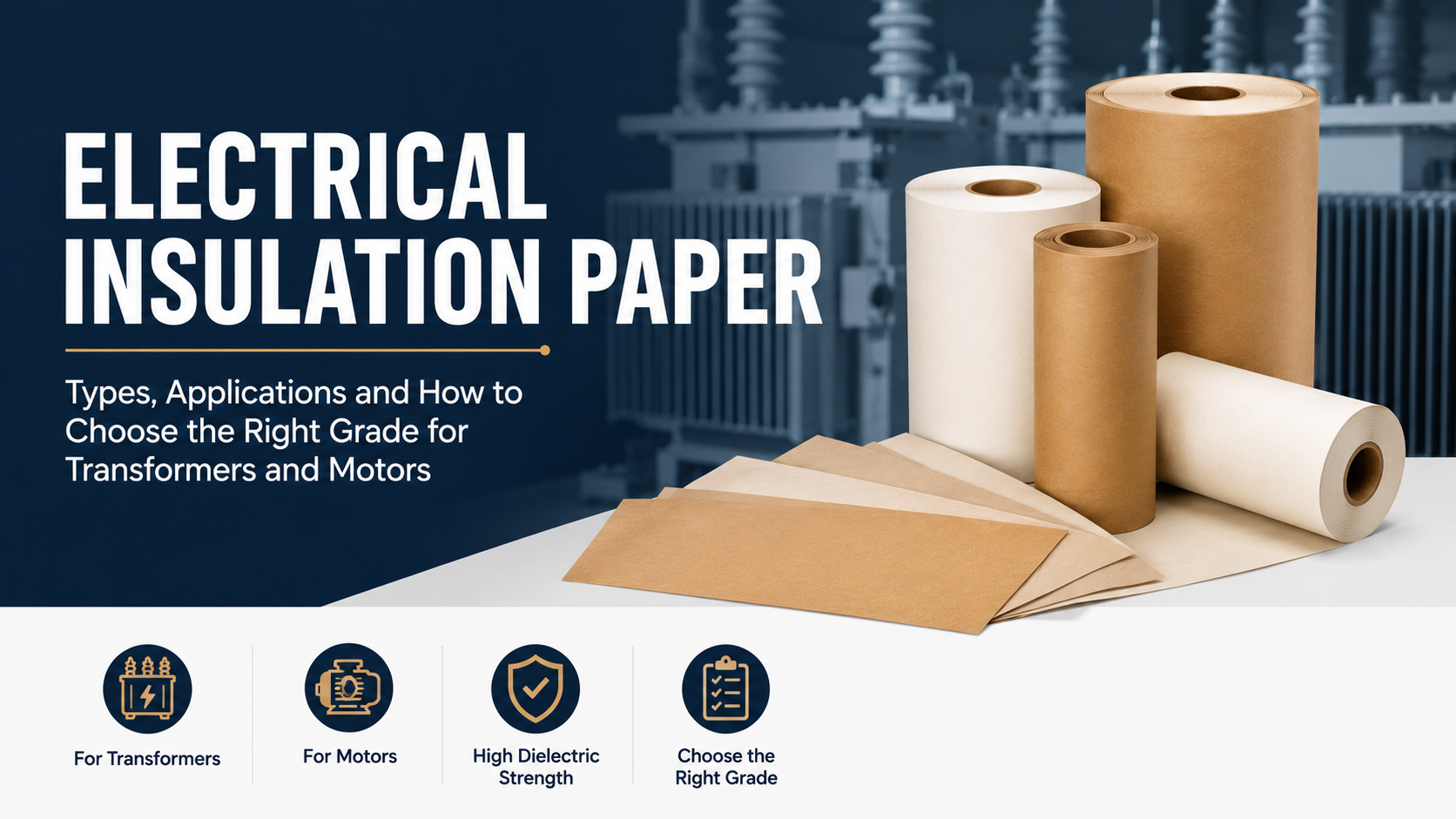
Electrical insulation paper plays a crucial role in enhancing the electrical efficiency of transformers and motors, ensuring their longevity. This paper provides electrical isolation and thermal stability for a wide range of electrical equipment, such as these two, under long hours of demanding conditions. It is highly essential to choose premium-quality electrical insulation paper; Using an unsuitable insulation paper can compromise dielectric performance, accelerate thermal aging, and increase the risk of equipment failure. Commercial and industrial facilities extensively use this paper to enhance the working efficiency of their equipment and safeguard them from electrical faults. There are multiple grades of electrical insulation paper with specific voltage and temperature handling capacities. This guide reveals all about these papers, types, applications, and how you can choose the right grade for your equipment.
What is an Electrical Insulation Paper?
Electrical insulation paper is a specialized dielectric material carefully placed between the conductor and winding to prevent short circuits and faults with isolation. These papers are of various grades, where each has specific voltage and temperature handling capacity.
Here are the three main functions of electrical insulation paper:
- Preventing Arcs: Does not let the electrical arcs form between the conductors with high dielectric strength.
- Stability: Provides high stability to the winding by restricting its movement due to vibrations and expansion because of heat.
- Thermal Strength: Has excellent thermal strength and can handle high temperatures to prevent equipment overheating.
Types of Electrical Insulation Papers
Type | Composition | Thermal Class | Typical Use |
Kraft paper | High-purity cellulose | A (105°C) | Oil-immersed transformer layer insulation |
Crepe paper | Crinkled kraft | A (105°C) | Leads, terminals, coil-end wrapping |
DDP | Kraft/press + epoxy dots | A-B | Winding lock, anti-corona, vibration resistance |
Pressboard | Compressed cellulose | A-B | Core gaps, oil channels, structural spacers |
DMD | Polyester nonwoven-film-nonwoven | B/F (130-155°C) | General-purpose motors, dry-type transformers |
Most transformers and motors fail due to the installation of wrong insulation paper. Here are their various types to understand and choose the right one:
Kraft Paper
These types of insulation papers are most commonly used in oil filled transformers for electrical isolation and preventing faults. It is cost-effective and helps to absorb oil, making repair or maintenance jobs easy. Made from high quality cellulose fibers, kraft paper is rated Class A (105 degree celsius).
Crepe Paper
This insulation paper is a much more flexible variant of kraft paper with a wrinkled surface. It is much easier to place on the curves and between the narrow places without tearing up, as it easily wraps around the surface.
DDP or Diamond Dotted Paper
It is a kraft paper with the coating of epoxy resin dots that keeps the winding fixed inside the motor when it heats. With high mechanical strength, DDP is ideal for installing inside the oil filled transformers to improve its electrical efficiency.
DMD Insulation Paper
This type of insulation paper is made with three layers of polyester laminate and is rated Class B/F (130-155 degree celsius). This paper is most commonly used for electric motors and dry type transformers due to its high durability and cost effectiveness.
Electrical Insulation Paper Based on Their Thermal Classes
- Class A (105 degree C): Kraft and crepe paper both come under this category which are used in oil-immersed transformers.
- Class B (130 degree C): Entry-level DMD fits this category, best for installing in general motors.
- Class F (155 degree C): DMD or NMN are categorised in this class, ideal for dry-type transformers and higher-duty motors.
- Class H: (180 degree C): Under this class, NMN or NHN fits perfectly. It is mainly placed in heavy-duty motors and compact transformers.
How to Choose the Right Grade Electrical Insulation Paper?
Here are the major points to remember when you select one:
- Thermal class: Select the class of insulation paper that can handle the operating temperature of the equipment, such as Class A, B, F, H, or higher.
- Application: Use the right paper for different electrical equipment, such as for transformers, motors, generators and many more.
- Dielectric Strength: It ensures that the material can safely handle the voltage level required by the equipment.
- Mechanical Strength: Choose the paper that has higher tear resistance and can handle maximum stress caused by long hours of equipment use.
- Buy From a Trusted Manufacturer: Source insulation paper from the trusted manufacturer offering consistent quality and reliable technical support.
Why Choose Khatema Fibres for Electrical Insulation Paper?
Khatema Fibres offers the following benefits:
- Trusted paper manufacturer with over 30 years of experience.
- Competitive pricing with direct purchase from the manufacturer.
- Offers insulation paper with higher dielectric strength and mechanical durability.
- Provides paper in multiple grades, GSMs, and custom sizes.
- The facility offers higher production capacity to deliver industrial orders without delays.
- Their every batch is produced under strict quality checks ensuring premium quality.