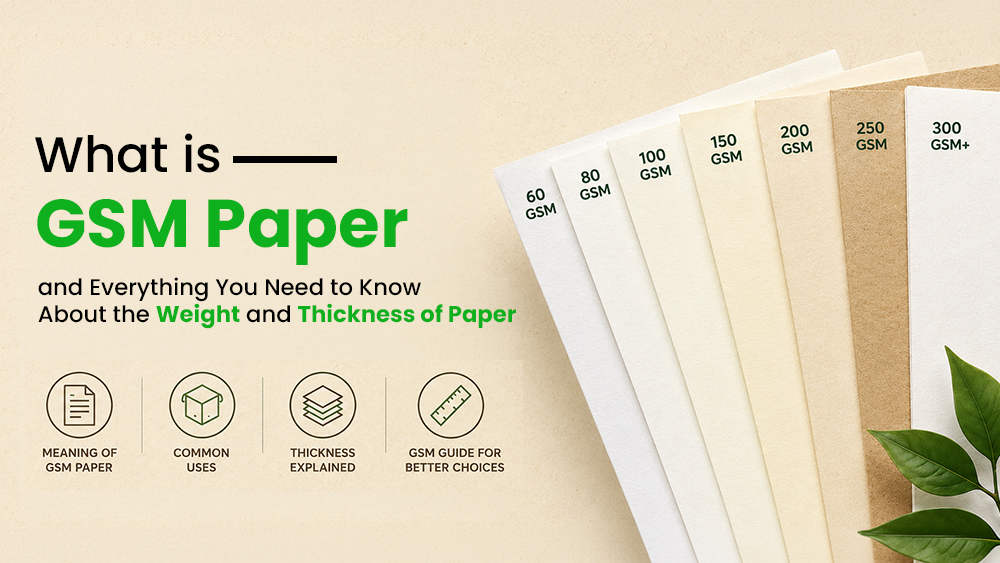
When a pack of paper reads 80 GSM or 300 GSM, a real question that comes to mind is, what these numbers represent and how they affect the paper quality.
GSM is an essential factor that you should understand to source the right quality and size of paper for your needs. Whether you are sourcing paper for printing office documents, invitation cards, marketing material, or packaging orders, choosing the right type and weight of material is the key to sustaining quality, which is defined by GSM values.
In this blog, we have revealed all about GSM and its relation to paper quality, size, thickness, and how to choose the right GSM paper for your specific application.
What is GSM in Paper?
GSM means Grams per Square Metre, an international standard that helps to measure paper weight. To put it simply, GSM value defines the weight of the paper sheet per square meter. A higher value indicates that the paper is heavier and thicker.
For example:
- An 80 GSM paper weighs 80 grams per square metre.
- A 300 GSM paper weighs 300 grams per square metre.
The GSM value is considered the same worldwide, and traders use it as a standard paper weight comparison method for doing business across various types and manufacturers.
What’s the Difference Between GSM and Paper Thickness?
People often get confused between the concepts of GSM value and paper thickness. They think that these two are the same, but they are not. Where the GSM indicates how heavy a paper is, the thickness is measured in microns (µm). Even if the two papers have the same GSM value, their thickness can be different. Meaning, two different types of papers may have the same weight and different thicknesses based on these factors:
- Fibre density
- Manufacturing process
- Coated vs uncoated finishes
- Virgin vs polished vs recycled paper
For example, A 200 GSM coated paper can be thinner than the uncoated 200 GSM paper because the coating compresses the paper fiber.
While sourcing a different type of paper in bulk quantity, you should consider the GSM value of the paper and its thickness differently to choose the right option for your needs.
What are the Different Types of GSM Paper for Your Specific Applications?
Here are some of the major GSMs used in different industries:
Office Printing (80-90 GSM)
80-90 GSM paper is considered the best for printing office documents as they are lightweight and affordable, meaning low transportation charges and upfront cost.
This GSM is best for printing:
- Reports
- Internal documents
- Everyday printing
- Photocopying
Letterheads and Stationery (100-120 GSM)
100-120 GSM paper is sourced in large quantities for printing letterheads and stationery applications. They are heavier than the office printing papers but have higher quality and provide a premium feel.
This GSM is best for creating:
- Letterheads
- Formal correspondence
- Corporate stationery
- Notepads
Flyers and Brochures (130-170 GSM)
130-170 GSM paper is much heavier and thicker, providing strength to the material. It is commonly sourced for crafting flyers and brochures for marketing purposes. However, as per their weight, these papers are affordable and can be easily sourced at the lowest prices from Khatema fibers.
This GSM is best for creating:
- Marketing materials
- Promotional flyers
- Leaflets
- Event handouts
Menus and Catalogues (200-250 GSM)
Heavier stock that feels premium and withstands frequent handling.
200-250 GSM paper is for creating menus and catalogues that are crafted to be very heavy and thick for more durability. They are designed to be printed with texts, visuals, and vibrant ink for promoting businesses. These paper products need to be durable to last longer like a kraft paper.
Best for:
- Restaurant menus
- Product catalogues
- Presentation covers
- Premium brochures
Business Cards and Postcards (270-350 GSM)
270-350 GSM paper is considered ideal for producing business cards and postcards that have unique coatings on the surface for protection. They are designed with much heavier paper quality and type to provide a long lifespan.
Best for:
- Business cards
- Greeting cards
- Invitations
- Postcards
Luxury Packaging (350-600+ GSM)
350-600+ GSM paper cannot actually be said as pure paper; it becomes cardboard for packaging delicate and expensive products. This level of weight and thickness allows the packaging to protect the product inside from falls and movement.
Best for:
- Premium packaging
- Product boxes
- Book covers
- Luxury branding materials
How Different Paper Finishes Affect the GSM?
GSM value only defines the weight of the paper per square meter and doesn't define its final outcome. Different paper finishes affect the appearance and performance of the paper in distinct ways.
Uncoated paper
Uncoated paper offers a more natural texture and is very easy to write on with higher ink absorption. It is sourced mainly for producing letterheads, books, and notebooks.
Gloss Coated Paper
Gloss-coated paper can have a higher GSM and a shiny, smooth finish. They are considered ideal for photography and are produced in different combinations of vibrant colors. These types of papers are best used for creating marketing flyers, product catalogues, and magazines.
Silk or Matte Coated Paper
These types of papers are mainly used in art and craft, and making marketing documents for their premium and silky smooth finish. These papers are available in vibrant colors with minimal glare reflecting back. Silk-coated papers are best for producing corporate brochures, annual reports, and presentation materials.
GSM Paper Compatibility With Different Printers
Before sourcing heavier printing paper, make sure that your printing device is compatible with it. Different types of printers support varying weights and sizes of paper to offer excellent quality:
- For Home Inkjet Printers: Buy 60-200 GSM
- Office Laser Printers support: 60-200 GSM
- The Professional Digital Presses can handle: 300-600+ GSM
How to Choose the Right GSM Paper?
When selecting paper, consider these factors:
- Purpose: Internal office use requires different paper than customer-facing materials.
- Printer Compatibility: Always check printer specifications before ordering.
- What Finish Do You Need: Choose between Kraft paper, Gloss, Matte, Silk, or Uncoated, based on your desired appearance.
- Your Budget: Higher GSM generally means higher cost.
- Check Samples: Physical samples are often the best way to compare paper options.
Common GSM Mistakes to Avoid While Sourcing
Avoid these common errors:
- Assuming GSM equals thickness.
- Using 80 GSM for heavy double-sided printing.
- Feeding cardstock through standard paper trays.
- Confusing Text weight and cover weight conversions.
- Choosing the lowest GSM to save money on customer-facing materials.
- Folding thick paper without scoring.